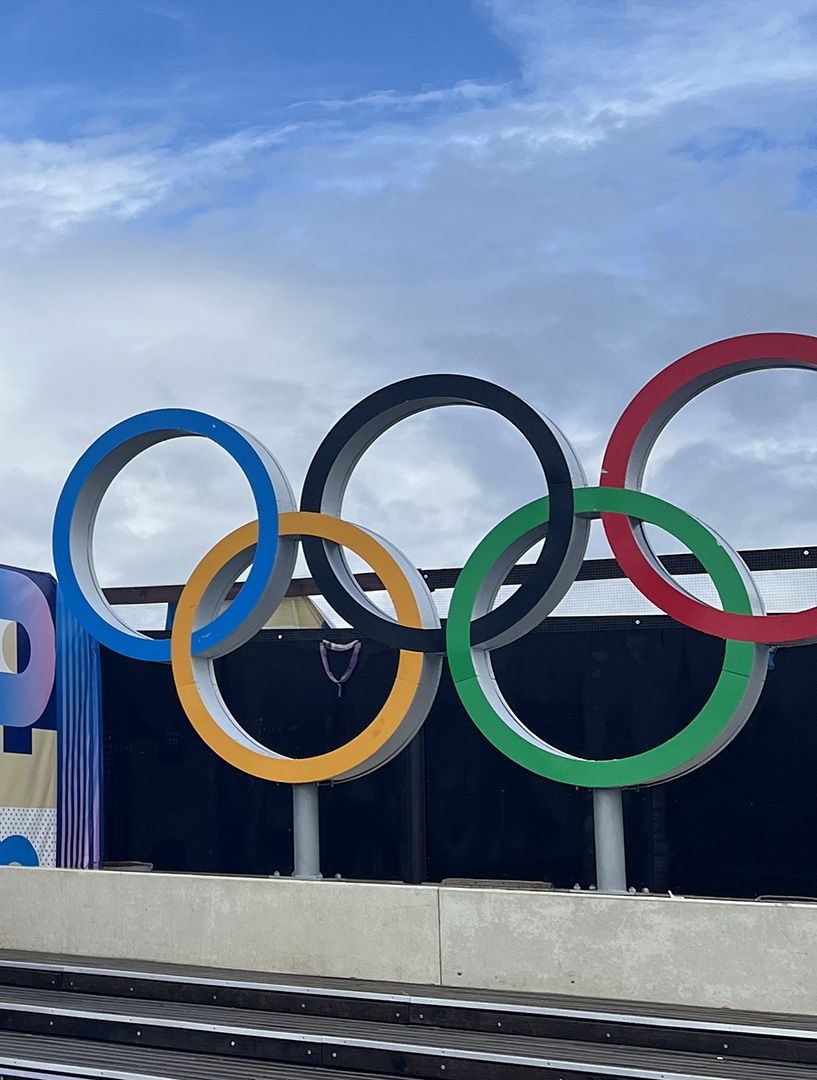
One year after the Olympics
What remains in Paris?
Even a year after the Olympic Games, the spirit of the major event lives on in Paris. In the background: the H4 Hotel Wyndham Paris Pleyel Resort, which offers space for up to 2,667 guests in its own conference and event centre with around 10,000 square metres of event space. Photo: Petra Mewes
Even a year after the Olympic Games, the spirit of the major event lives on in Paris. In the background: the H4 Hotel Wyndham Paris Pleyel Resort, which offers space for up to 2,667 guests in its own conference and event centre with around 10,000 square metres of event space. Photo: Petra Mewes
One year after the Olympic Games, it is clear that Paris 2024 was more than just a major sporting event. Did the hotel industry and the MICE market also benefit? Absolutely! This was confirmed by research conducted by tw tagungswirtschaft in the summer of 2025.
For some, the Olympics are a magic word; for others, there are concerns that the surge in tourism could do more harm than good to the market. However, the numbers tell a clear story of success: more than 12 million tickets were sold for Paris 2024, 8 million people visited the public fan zones, and 45,000 volunteers were active on site. Five billion viewers worldwide followed the events on television and digital channels. It was an unparalleled global marketing campaign. The Games also served as an economic stimulus and a driver of value creation. A total of 181,000 new jobs were created in construction, event organization, and tourism. In the long term, the Greater Paris area is expected to see an economic boost of 6.9 to 11.1 billion euros, spread over a period of up to 17 years.
Advertisement
Growing hotel market
Before the 2024 Olympic Games, Paris and Greater Paris had over 2,000 hotels. Today, just one year later, that number has grown significantly: more than 2,500 hotels now offer over 150,000 beds.
A key factor in this success has been the collaboration between the official marketing agencies L’Agence d’attractivité Pop and Choose Paris Region. Their efforts targeted at event organizers have played a major role in positioning Paris as a leading destination for meetings, incentives, conferences, and events (MICE). Emmanuel Blum from L’Agence d’attractivité Pop explains: “We are driving the ‘big transformation’ of the city—from its historical image to a modern one—keeping the ‘spirit of the Olympics’ alive and sustaining interest in the region.
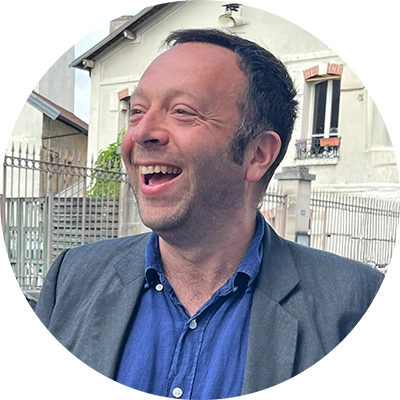
Photo: Petra Mewes
"We are driving forward the 'big transformation' of the city from its historical image to a modern one, keeping the 'spirit of the Olympics' and interest in the region alive."
Emmanuel Blum, Managing Director of L'Agence d'attractivité Pop
According to Choose Paris Region, hotels recorded record growth of 66 per cent in the average price per night during the Games: from £187 in 2023 to £310 in 2024, with occupancy rates climbing to 84 per cent, up 10 per cent on the previous year. Emmanuel Blum reports that "incoming tourism in the first half of 2025 is already 6 per cent higher than in the same period before the Games". And the construction cranes continue to turn, for example in the former Olympic Village, which has been converted into an inclusive neighbourhood for 6,000 people and opened in August 2025.
Advertisement
One of these newly opened hotels debuted just in time for the Olympics: the H4 Wyndham Paris Pleyel Resort, part of the Revo Hospitality Group. The Paris-based architectural firm led by Axel Schoenert began planning the project in 2019 and, starting in 2022, completely transformed a 1960s office tower into a modern hotel complex. The result is a state-of-the-art property with 697 air-conditioned rooms, four restaurants, two bars, a fitness area, and a pool. Just a few minutes’ walk from the hotel brings guests to a station serving metro line 13 as well as the brand-new line 14, built specifically for the Olympics. “Both lines take you directly to the city center in about 30 minutes,” say Stig Castoe, General Manager since July 2025, and Hotel Manager Timo Obalek, during a conversation in the Sky Bar “The Stage” on the 40th floor—which offers a breathtaking panoramic view of Paris, including the Eiffel Tower and Montmartre.
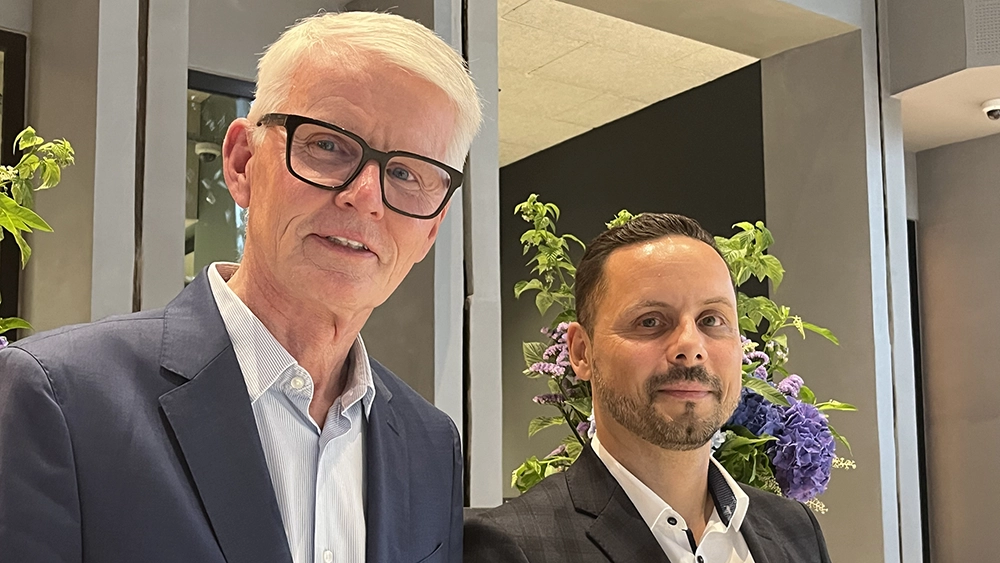
Stig Castoe (left), General Manager, and Timo Obalek, Hotel Manager at the H4 Hotel Wyndham Paris Pleyel Resort. Photo: Petra Mewes
The highlight for the MICE sector is the congress centre, which, according to Castoe, is one of the largest private centers in the region and can be booked exclusively by clients. Spanning over 10,000 square meters, it offers 16 flexible conference rooms—most with natural daylight—and a 1,180-square-meter plenary hall with eight-meter-high ceilings, accommodating up to 2,600 guests. “From international summits and gala dinners to exhibitions, the modular layout, cutting-edge technology, and open architecture provide the perfect setting for all types of events,” explains Sales Manager Emilie Lamy. A 400-seat restaurant further enhances the venue’s offerings.
The H4 Hotel Wyndham Paris Pleyel Resort is also conveniently located in Saint Denis, just 20 kilometers from Charles de Gaulle Airport and 29 kilometers from Orly Airport, with easy access from Paris’s train stations—making it an ideal choice for conference guests.
The Skybar "The Stage" at the H4 Hotel Wyndham Paris Pleyel Resort was named one of the top 15 hotel restaurants in France in 2025. Photo: Petra Mewes
Event locations away from the tourist crowds
In Paris, event organizers are spoiled for choice with an array of exceptional venues for conferences and seminars. The Bourse de Commerce, for example—a historic site reimagined—impresses not only with its spectacular exhibitions, but also with its flexible event spaces and cutting-edge technology.
While the heart of Île-de-France is gradually becoming more crowded and tourists tend to flock to hotspots like Notre Dame or the picturesque Montmartre district, there are hidden gems waiting to be discovered in the surrounding region, away from the mainstream.
The Bourse de Commerce – Pinault Collection offers spectacular spatial experiences: in the circular rotunda, the museum regularly stages large-scale installations that combine the historic building with contemporary art. Photo: Petra Mewes
Stade de France, for example, offers a wide range of meeting rooms and VIP boxes. Manon Wojtenka, Head of Communication & Marketing at Agence Cultival, is enthusiastic: “The Stade de France not only has a unique atmosphere, but also provides numerous opportunities for meetings and conferences behind the scenes, as well as access to areas that are usually off-limits to the public.” A tour typically begins in the stands, where guests can take in views of the impressive stadium, before a guide leads them to the players’ changing rooms and through the iconic tunnel onto the pitch. Beyond hosting legendary matches, the Stade de France is also renowned for major cultural events, concerts, and large-scale gatherings. So you don’t need to be a football fan—you just need to be open to this world full of emotion and excitement.
An icon with capacity: in addition to sporting events, the Stade de France, with its modular stands, VIP lounges and outdoor areas, serves as a multifunctional location for conferences, corporate events and incentive formats. Photo: Charly Hel
The cinematic atmosphere of the Cité du Cinéma provides a striking contrast: this film studio complex, located in a former power station in the Seine-Saint-Denis district north of Paris, was conceived and founded by French director and producer Luc Besson. Often referred to as the French counterpart to Cinecittà (Italy), Pinewood (UK), and Babelsberg (Germany), it was inaugurated in September 2012. The Cité du Cinéma is home to the French film school École nationale supérieure Louis-Lumière, the film production and distribution company EuropaCorp, and the Paris studios, among others. During the Olympic Games, it even served as the catering center for athletes from the nearby Olympic Village. After the Games, construction work resumed and is expected to be completed next year. Once finished, the entire site is projected to attract up to 300,000 visitors annually as a vibrant hub for events, culture, art, and dining, with its own food court.
Unique pieces with character
Also located in Saint Denis is the Académie Fratellini, a hub of creativity and artistry. This arts and training center for circus performers not only allows individuals and groups to watch training sessions, but also offers a variety of courses and an on-site restaurant. Its inspiring facilities can be booked for workshops and events, providing a relaxed and creative atmosphere for constructive gatherings.
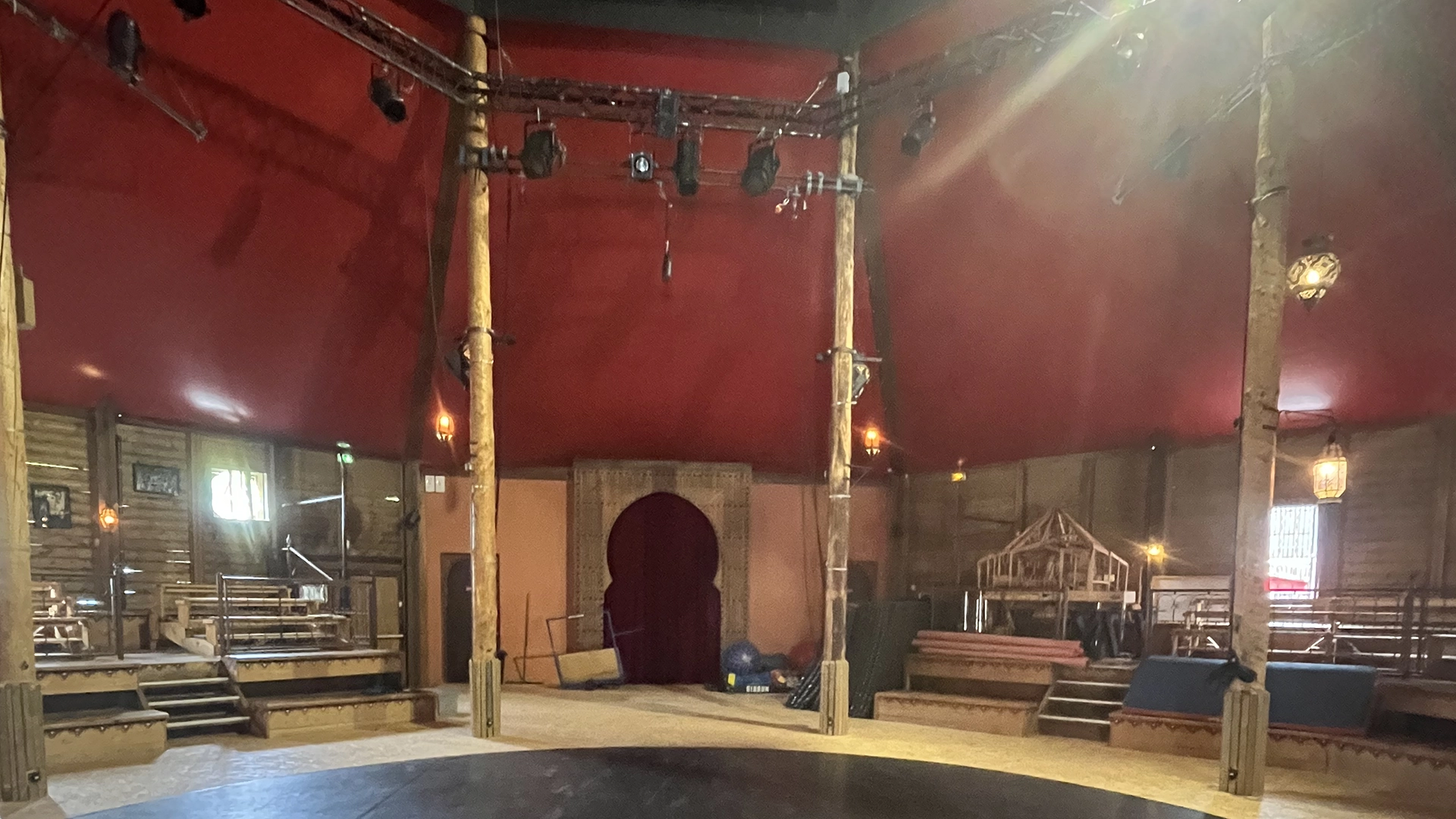
The circus ring of the renowned Académie Fratellini circus school combines traditional craftsmanship with modern stage technology and is suitable for workshops, shows and creative business formats. Photo: Petra Mewes
The Paname Brewing Company, founded in 2015, is also an ideal choice—a rustic venue set in a working brewery with a pub and scenic views of the Canal de l’Ourcq. “Our goal is to become the capital’s go-to brewery, as Paname is reinventing classic beers with a modern twist and a variety of influences,” says Marketing Director Tomas Kennedy with confidence.
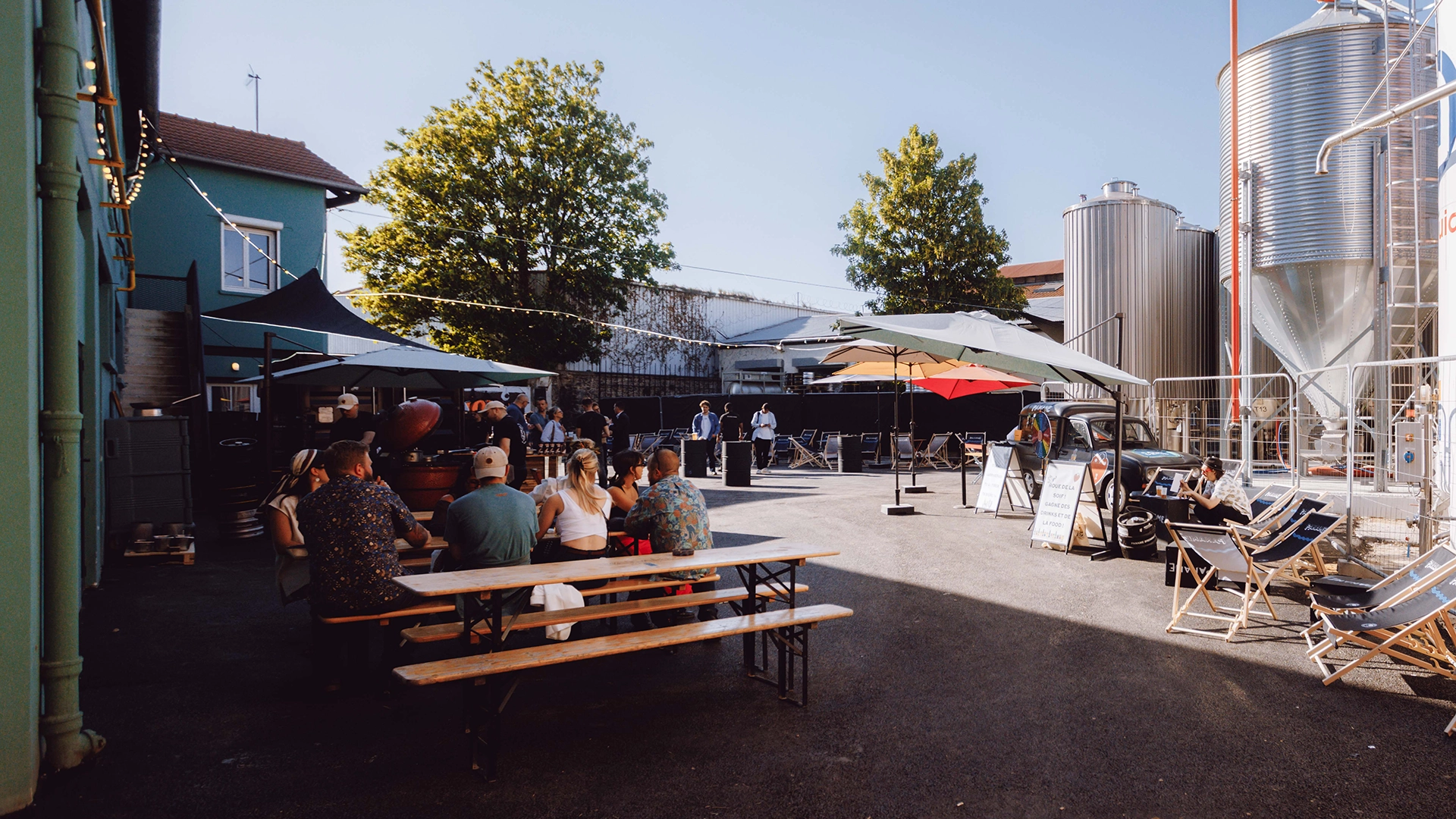
With its outdoor area between brewing kettles and beer garden atmosphere, the Paname Brewing Company offers an extraordinary backdrop for informal business events and relaxed networking events. Photo: Petra Mewes
In addition to these offerings, cultural destinations are also well worth a visit for MICE groups as part of their incentive programs. For example, the atmospheric Basilica Cathedral of Saint-Denis, the burial place of the kings of France. Built in the 12th century, it is considered a jewel of Gothic architecture. Right next door, at the Fabrique de la Flèche, visitors can learn about ancient building trades being used today to faithfully reconstruct the cathedral’s north tower, which was destroyed in the 19th century and is now open to the public.
The metropolis on the Seine has thus proven itself not only as an exceptional host for the Olympic Games, but also as a dynamic, future-oriented venue for a wide range of events. The boom in the hotel industry and investments in infrastructure together provide a solid foundation for the continued growth of the MICE sector in Paris. Of course, competition remains fierce and the pressure to maximize the use of existing capacity is increasing. However, this also presents countless opportunities for event organizers and conference planners to stage outstanding events in a region that continues to thrive—in Paris and beyond.