Digitalisation as a competitive factor
Which digital touchpoints really increase the attractiveness and booking probability of event venues
Digital touchpoints are effective: what promotes purchasing decisions in retail also increases the likelihood of booking venues in the events sector – a topic that was also the focus of the "Elevator Digital Media Forum" 2024 in Ho Chi Minh City and Hanoi. Photo: Chicilon Media
Digital touchpoints are effective: what promotes purchasing decisions in retail also increases the likelihood of booking venues in the events sector – a topic that was also the focus of the "Elevator Digital Media Forum" 2024 in Ho Chi Minh City and Hanoi. Photo: Chicilon Media
The events industry is undergoing a profound digital transformation. Decisions about event venues are no longer based primarily on traditional criteria such as location or facilities. The digital capabilities of a venue are becoming increasingly important: How well are booking processes handled? How intuitive is visitor guidance? How are hybrid participants integrated? Venues that excel in these areas increase their visibility – and secure measurable competitive advantages. A guest article by Dr Anja De Lorenzo.

Recent studies confirm this trend. The Event Trend Study Switzerland 2024 reveals that hybrid event formats now represent over a third of the market share, offering particular advantages in terms of reach and flexibility. Global market analyses further predict a continued increase in the volume of virtual and hybrid events through 2030. At the same time, a recent survey by Cvent shows that over 70 percent of event planners are already using digital tools to optimize the customer journey—from the very first digital touchpoint to post-event follow-up.
Digital touchpoints along the customer journey in the events sector – from visibility and bookability in the pre-event phase to experience and interactivity during the event to feedback and customer loyalty in the post-event phase.
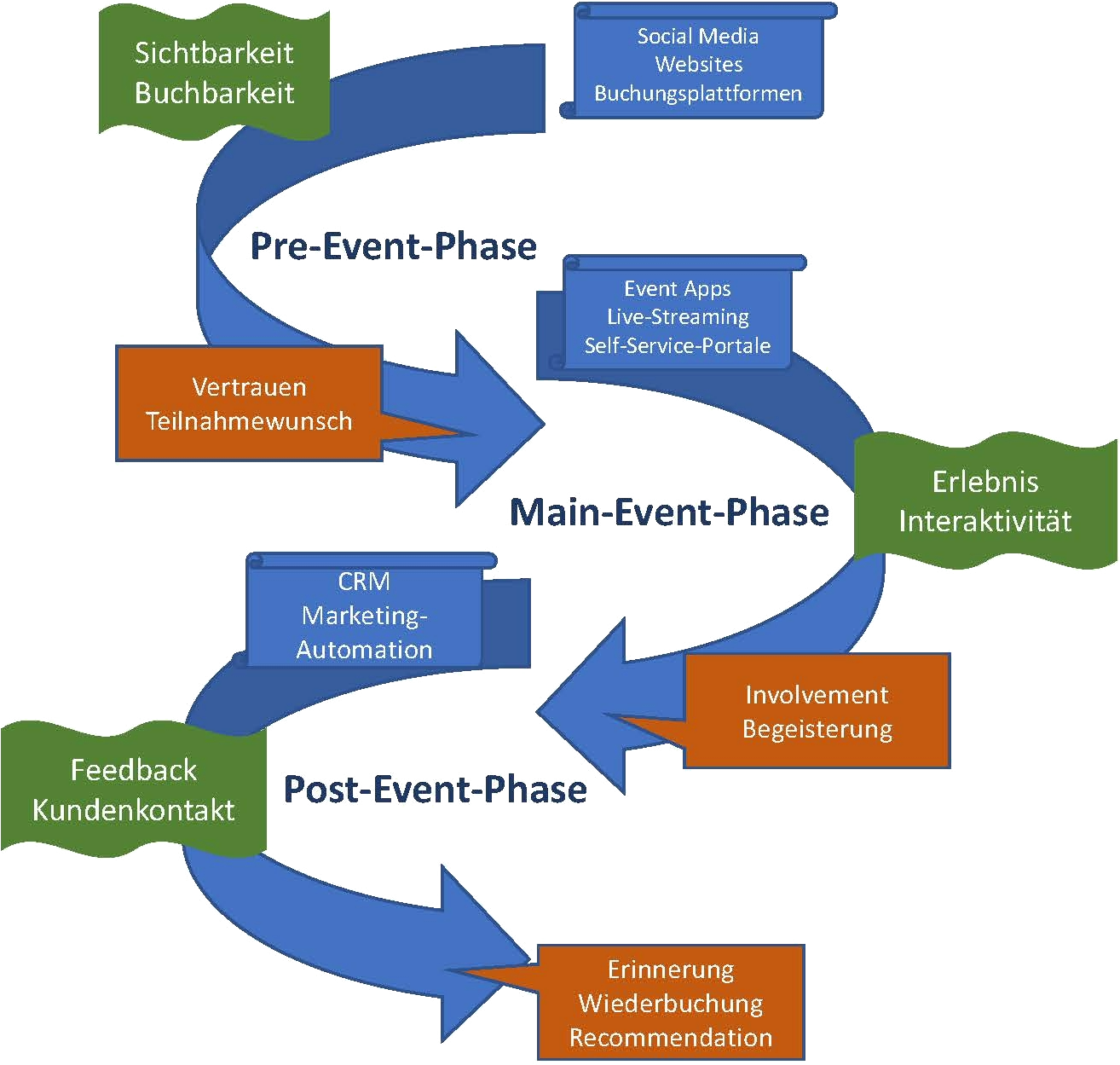
Graphics: Dr. Anja De Lorenzo
However, the challenge today is less about the availability of digital solutions and more about their strategic selection and seamless, user-friendly integration. Digital touchpoints must be intuitive, accessible, and foster trust—particularly in the B2B sector, where decisions are guided by rational considerations but heavily influenced by user experience. As a result, digitalization is evolving from a mere supporting tool into a decisive factor for success. Those who fail to deliver a compelling digital experience risk losing relevance, regardless of their venue or capabilities.
Advertisement


Pre-event phase: visibility and bookability as success factors
Even before the actual event takes place, the decision is often made whether a venue will be considered at all. In the pre-event phase, digital touchpoints are the key drivers of visibility, comparability, and ultimately, conversion. Venues stand out when they offer relevant information through intuitive websites, mobile-optimized booking platforms, and a professional presence on social media. These channels do more than just inform—they build trust and make planning easier for potential clients.
Studies show that digital registration and management tools significantly streamline participant recruitment. Solutions such as online booking forms, automated confirmation emails, and self-service portals enhance efficiency and project a modern, service-oriented image for the venue. In a highly competitive market, this critical first impression often carries more weight than square footage or catering options.

Those who fail to impress digitally will lose relevance – regardless of location or capacity.
At the same time, practical experience shows that not all target groups are receptive to purely digital communication. Personal contact options—such as telephone consultations or individualized responses via email—remain essential, particularly for more complex events. The real challenge, therefore, is not digitalization alone, but the effective integration of digital channels with traditional forms of communication. Those who excel at combining both approaches are perceived as professional and customer-focused, significantly increasing their chances of being shortlisted by potential event organizers.
Advertisement

Main event phase: Experience, orientation and interactivity
During the event itself, it becomes clear whether the expectations set beforehand are being fulfilled. In this main phase, digital technologies play a key role in optimizing visitor guidance, interaction, and overall experience quality. Tools such as event apps enable personalized agendas, support on-site navigation, and provide instant access to essential information like floor plans, speaker profiles, or live updates. Digital signposts, QR codes for seamless check-ins, voting tools, and gamification features further encourage active participation and increase attendee engagement at individual stations.
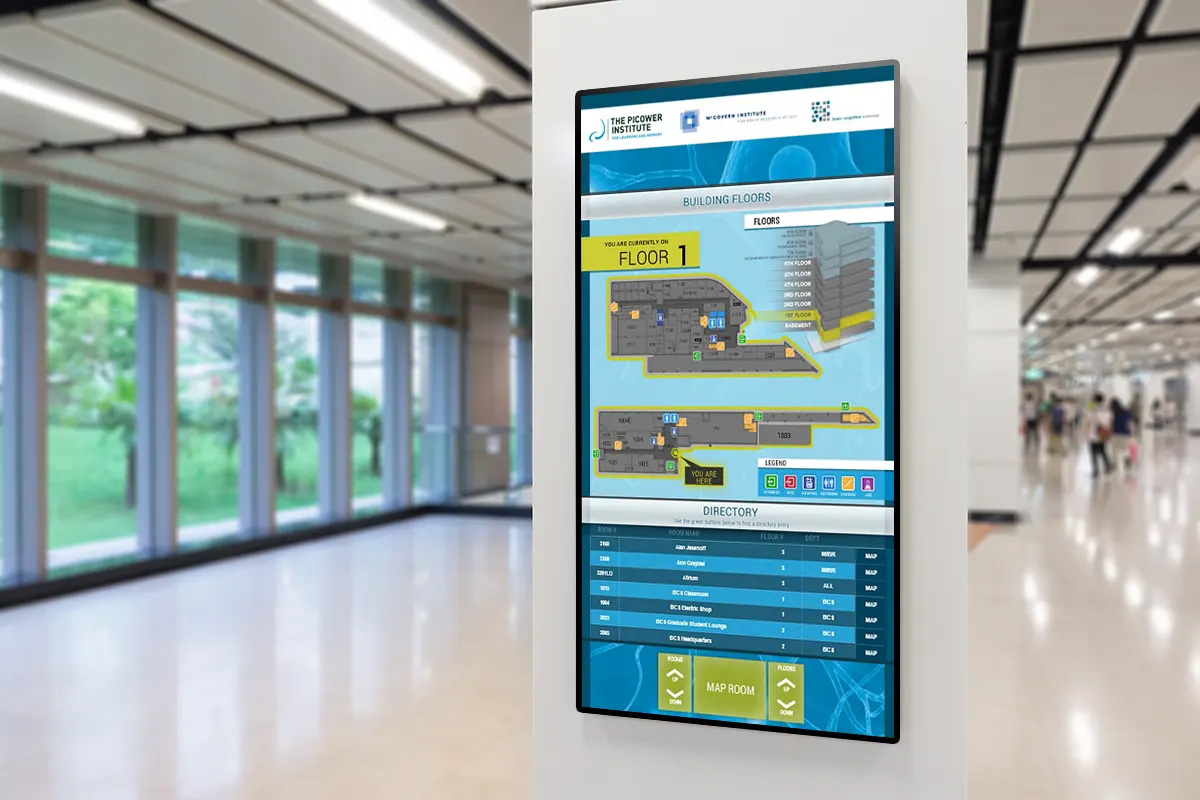
Digital touchscreen signposts offer modern orientation aids: with interactive maps, search functions and personalised information, they improve visitor guidance and create an intuitive user experience on site. Photo: Visix
Hybrid formats, in which virtual and physical participants are integrated in parallel, pose special challenges: they require a smooth technical infrastructure. Livestreams and webcasts significantly expand the reach and enable location-independent participation – a factor that is particularly attractive for international conferences. At the same time, organisers emphasise that technical problems such as unstable Wi-Fi or a lack of charging infrastructure can severely impair the experience. Digitalisation must therefore not be an end in itself, but must be reliable, intuitive to use and accessible to all. In addition, the experience factor plays a central role: an informative but emotionally distant event has less lasting impact than one in which content, technology and atmosphere are coordinated. Successful providers use digital means not only to convey information, but also to create genuine experiences – multimedia, personalised and interactive.
Post-event phase: data, feedback and loyalty
After the event, the phase in which digitalization becomes especially effective begins: systematic follow-up. Digital tools not only help evaluate an event’s success, but also play a crucial role in building customer loyalty. Feedback forms, online surveys, and social media reviews enable rapid, insightful evaluation of how the venue was perceived. An article by Esch, Alt, and Knörle in an anthology on digitalization in sales highlights that targeted touchpoint management during this phase significantly raises the likelihood of repeat bookings.
Customer relationship management (CRM) systems and marketing automation further expand these opportunities, enabling targeted follow-up—such as automated thank-you emails, personalized follow-ups, or exclusive early bird offers. These digital touchpoints effectively extend the event experience and maintain ongoing dialogue with clients. In a market where loyal customer relationships are both rare and highly valuable, this post-event phase becomes a critical strategic arena..
However, purely digital communication does not resonate equally with all customers. Many clients appreciate personal feedback as a supplement—for example, through a brief phone call or individualized conversations. Especially for larger or more complex projects, fully automated follow-up is often insufficient. Organizers who combine digital evaluation with authentic relationship management demonstrate both professionalism and a personal touch—a clear competitive advantage when it comes to securing repeat business.
Competitive advantage through digital strategy
Digital touchpoints are no longer a mere add-on, but a decisive factor in the selection of event venues. They influence the entire customer journey and play a significant role in shaping perceptions of professionalism, innovation, and customer orientation. As venues become increasingly comparable, the decision is no longer based solely on location, price, and facilities—digital maturity is now a critical differentiator.
Consistent digitalisation in event management must fulfil two objectives simultaneously: increased efficiency and quality of experience.
Venues that consistently craft digital experiences throughout the customer journey measurably enhance their market position. A 2022 study by Godbersen & Hausinger demonstrates that satisfaction with digital touchpoints has a direct impact on repeat bookings and recommendations. Additional research underscores that personalised communication and automated processes not only save resources, but also significantly boost customer loyalty.
However, digitalisation alone is not sufficient. What truly matters is how digital touchpoints are designed, interconnected, and integrated into the overall experience. Earlier touchpoint models have already cautioned against “digitalising” customers without emotional engagement, while more recent analyses remind us that every touchpoint is a "moment of truth"—an encounter that can shape perceptions positively or negatively.
Consistent digitalisation in event management must therefore achieve two goals at once: greater efficiency and enhanced quality of experience. Technical tools should not only optimise processes, but also create emotional relevance—through real-time communication, transparent information, and seamless interaction. In particular, hybrid formats and AI-based solutions offer new opportunities by combining broad reach with individualisation, allowing events to scale without losing their unique character.
Event venues that master this balance gain not only greater visibility but also a genuine competitive edge. In this way, digitalisation becomes more than an end in itself—it becomes a strategic key to long-term market success.
Dr. Anja De Lorenzo
Literature (excerpt)
Arias, J. D. et al. (2011): Integral solution for web-conferencing event management. verfügbar unter: https://core.ac.uk/download/pdf/148660781.pdf
Birdir, K. et al. (2021): Impact of ICTs on event management and marketing. verfügbar unter: https://doi.org/10.4018/978-1-7998-4954-4
Cvent (2025): 116 Event Statistics Shaping the Industry in 2025. verfügbar unter: https://www.cvent.com/en/blog/events/event-statistics
Esch, F.-R. et al. (2023): Omni-channel strategies through customer touchpoint management. Available at: https://doi.org/10.1007/978-3-658-38433-3_27
EXPO EVENT, svtb & VSSA (2024): Event Trend Study Switzerland 2024. Available at: https://api.expo-event.ch/site/assets/files/3626/p21138_event_trend_studie_schweiz_2024_55.pdf
Godbersen, H. & Hausinger, C. (2022): Customer Touchpoint Management: Systematisation and Influence on the Brand Experience.
Kounavis, C. D. et al. (2012): Enhancing the Tourism Experience through Mobile Augmented Reality: Challenges and Prospects. verfügbar unter: https://doi.org/10.5772/51644
Lemon, K. N. & Verhoef, P. C. (2016): Understanding Customer Experience Throughout the Customer Journey. verfügbar unter: https://doi.org/10.1509/jm.15.0420
Wagner, G. et al. (2020): Digital Customer Touchpoint Management: A Conceptual Framework. Available at: https://doi.org/10.1016/j.jbusres.2018.10.048